

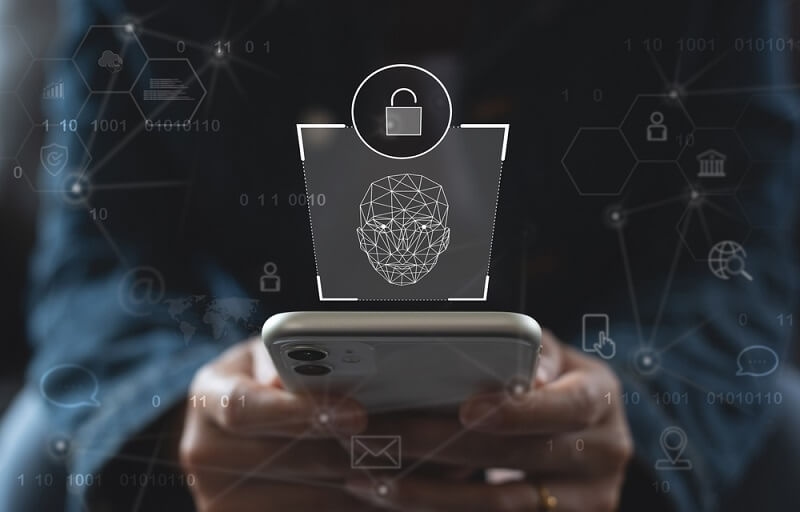
In an era of a rapidly evolving digital economy, biometric banking security is becoming a key element of safe and effective financial services in the United States. With legacy passwords moving toward oblivion, we now see fingerprint login banks USA and facial recognition banking applications becoming more prevalent. In this article, we will explore how biometric banking security, including voice recognition, facial recognition, and scans, is not only convenient but it is also a critical defense against cybercrime and cyberthreats.
Biometric banking security is the use of biometrics that are unique to individuals, including fingerprints, facial features, voice recognition, and even retina scans, to identify the individual and allow the financial transaction. Unlike passwords or PINs, biometric data does not have a form that can be replicated or obtained, meaning it is a significant asset on the front line against fraud.
The banking industry in the United States is developing fingerprint login banks USA and facial recognition banking applications allowing customers to automatically gain access to their money with security. The mobile banking sector is challenging biometric banking technologies and customers now expect quickness and high security.
Fingerprint scanning is one of the more commonly used biometric methodologies in the United States, which provides an easy and convenient user experience. Major U.S. banks, such as Bank of America, Chase, and Wells Fargo, all offer fingerprint login through mobile apps. This technique lessens the chances of compromised credentials, given that each fingerprint is unique, which makes reproducing it hard.
Fingerprint login is integrated into many devices, including cell phones and tablets, that spare the user from recalling a password. The growth of fingerprint login shows that when barriers to login are reduced, users of financial apps will engage more.
With the implementation of fingerprint login banks USA, banks reduce risk and provide a fast and convenient customer experience.According to recent polls, more than 65% of Americans prefer face and fingerprint recognition over traditional passwords.
Facial recognition banking applications are soon becoming the norm in retail and commercial banking. Facial recognition applications scan the geometry of a face to verify identity, employing AI-driven algorithms to establish accuracy.
Leading banks like Citi, Capital One, and TD Bank have incorporated facial recognition into their mobile banking applications. Users merely hold the phone in front of their face to access the application—no PINs or passcodes.
The application of facial recognition banking apps has dramatically reduced the frequency of account compromises. With other security measures, for example, device registration and behavioral analytics, facial recognition renders any form of unauthorized access practically impossible.
Apple's Face ID has become the gold standard for facial recognition in consumer technology. Banks in the U.S. have borrowed a leaf from this technology to upgrade their own systems. Bank of America's Erica app, for example, applies facial recognition as one of the layers of multi-layered authentication.
As digital banking gets more chatty, voice authentication banking is gaining popularity. Using voice biometrics, banks examine pitch, tone, and speech pattern to authenticate identity.
Voice authentication is especially handy for telephone banking facilities and integration with smart speakers. HSBC and Barclays (with U.S. branches) have already been using this facility, enabling the customers to utter a simple sentence such as "My voice is my password" to receive access.
The addition of voice banking authentication is particularly useful for blind customers or individuals that have trouble with fingerprint or facial scanning.
Virtual banking assistants are also integrating with voice recognition systems. Such digital agents rely on both voice and contextual clues to walk customers through advanced transactions without affecting security.
Though well worth its advantages, biometric fraud threats are escalating. It's difficult to imitate biometric characteristics, but it's not inconceivable. Biometric templates on central servers can be hacked by thieves if adequate encryption isn't applied.
Another hazard is potential "deepfake" technology, where misuse of AI-created voice or face images may create risks to poorly secured systems. Banks are now working to merge biometric information with AI-based fraud protection in order to mitigate those risks.
Privacy advocates are also sounding alarms regarding the length of time biometric information can be stored and who has access to that information. Biometric data protection of privacy in U.S. banks has increasingly become ethical and regulatory issues. Banks must meet the terms of laws like the California Consumer Privacy Act (CCPA) and Illinois Biometric Information Privacy Act (BIPA), both of which have strict guidelines for how information may ultimately be used.
Constantly discussing biometric fraud threats ensures readers realize the value of a strong cybersecurity infrastructure in banking.
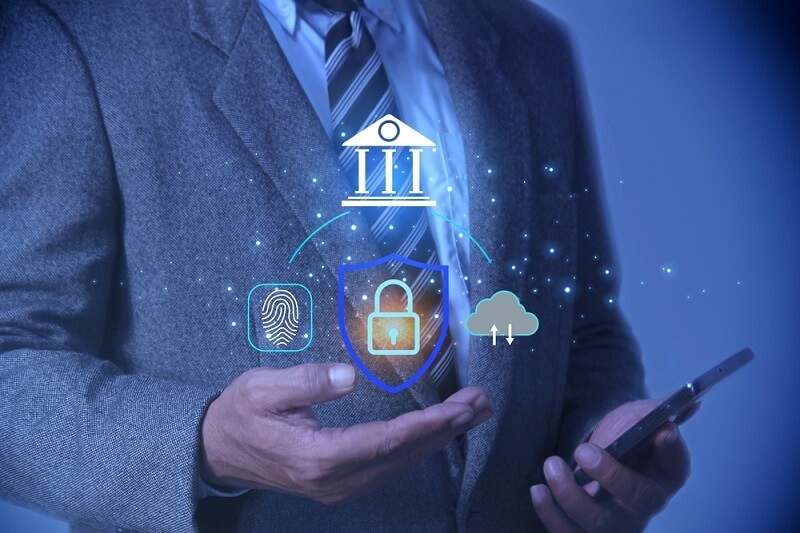
Privacy is at the top of the list when dealing with biometric security. Banks need to be open about how they gather, store, and use biometric data. Federal regulations presently provide minimal oversight, and therefore, numerous states have established their regulations.
For instance, BIPA makes written user consent mandatory prior to harvesting their biometric information and ensures individuals have a right to sue in case of non-compliance. The law has shaped banking policy such that U.S. bank privacy while using biometric data takes precedence.
To comply with privacy requirements, banks are now adopting the use of data anonymization. Instead of storing raw biometric data, they store encrypted mathematical proofs that can't be reverse-engineered. This also reinforces the security of customer identity, even in the event of a system breach.
While biometrics do provide very secure authentication, they are typically not used alone by most banks to prove identity. Multi-factor authentication (MFA) requires that the user present some knowledge (password), something they have (a phone), and something they are (fingerprint). The many layers of information involved in the MFA offer a lower probability of unauthorized access.
In terms of layer of security, if they used a biometric method of authentication to complement their MAF technology banks are adding another layer to side step fraud. Even if one layer is violated, there remain layers to protect the account.
Despite these barriers, the long-term benefits outweigh the short-term pain and as a result biometrics are a strategic imperative for all financial institutions.
New developments such as iris scanning, heartbeat authentication, and even palm-vein scanning are being pilot tested in laboratory banking settings. These new modalities could soon accompany or potentially replace existing practices.
Artificial Intelligence (AI) and Machine Learning (ML) will also be the drivers of enhanced accuracy and anomaly detection in biometric information. These technologies are able to identify minute variations in patterns of use, enabling banks to react in real time to suspected fraud.
Cross-platform integration will also be commonplace where a customer’s unique biometric information provides access to multiple financial services — banking, investments, and insurance — with a single digital identity.
Biometric security is past the stage of being a "thing" — it's now the future or present of financial security in the U.S. The rapid growth of fingerprint login banks USA, facial recognition banking apps, and voice authentication in banking means that consumers now have the advantage of not just increased safety, but increased convenience.
However, with this increasing uptake comes concerns around potential biometric fraud threats and consumer privacy for U.S. banks with biometrics. Banks have to contain that healthy level of innovation against the risk of failure, and be certain that biometric devices were developed in a safe, fair, and easy manner for the public to use.
Whether you're a consumer looking for more secure online banking or a financial institution considering your next innovation on security, now is the time to get involved and think about implementing biometric banking.
This content was created by AI